



How Long Does It Take to Build a Website? Complete Business Timeline Guide 2026
Why Website Development Timelines Vary
Not every website takes the same amount of time. A one-page landing page is very different from a fully custom business portal or online store.
According to recent industry reports, website timelines generally range from 1 week to 6 months, depending on project complexity.
Here are the biggest factors affecting website development time:
- Number of pages
- Custom design requirements
- SEO implementation
- Content availability
- Mobile responsiveness
- Third-party integrations
- eCommerce functionality
- CMS setup
- Approval delays
- Speed optimization
Average Website Development Timeline
| Website Type | Estimated Timeline |
|---|---|
| Landing Page | 3–7 Days |
| Basic Business Website | 2–4 Weeks |
| WordPress Website | 3–6 Weeks |
| eCommerce Website | 1–3 Months |
| Custom Web Application | 3–6 Months |
| Enterprise Platform | 6–12 Months |
Industry experts state that small business websites usually take around 2–6 weeks, while complex platforms require much longer development cycles.
Complete Website Development Process Explained
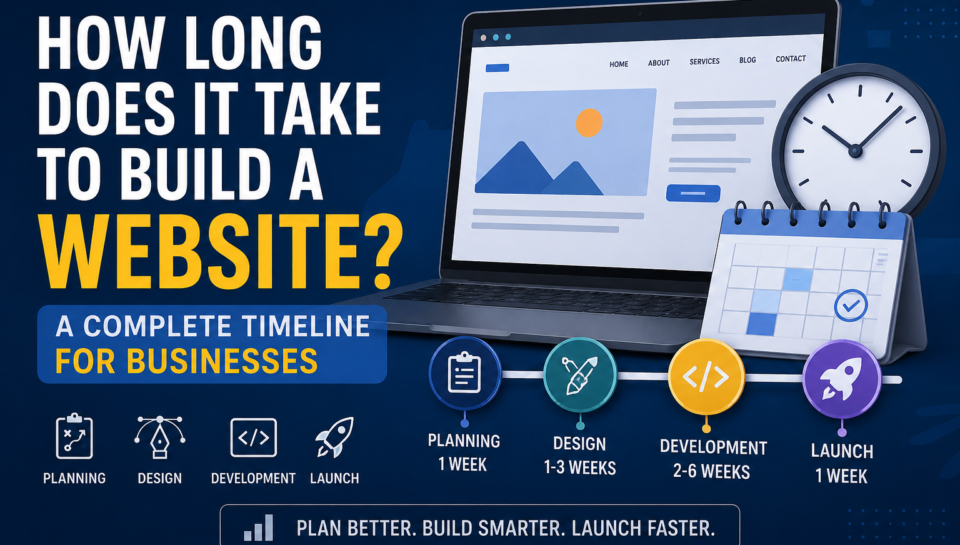
1. Discovery & Planning Phase (2–7 Days)
This is the foundation stage where goals, features, and business requirements are finalized.
Tasks Included:
- Business research
- Competitor analysis
- Target audience planning
- Sitemap creation
- SEO planning
- Technology selection
Why This Phase Matters
Without proper planning, projects often face delays later during development.
Businesses that finalize requirements early usually complete websites much faster.
2. Website UI/UX Design (1–3 Weeks)
The design phase focuses on the visual appearance and user experience.
Includes:
- Wireframes
- Homepage design
- Mobile responsiveness
- Color scheme
- Brand alignment
- User journey optimization
Custom designs naturally take longer than template-based websites.
If multiple stakeholders are involved in approvals, design revisions can add several extra days.
3. Website Development Phase (1–6 Weeks)
This is where developers turn the design into a functional website.
Frontend Development
- HTML/CSS coding
- Responsive layouts
- Interactive elements
- Speed optimization
Backend Development
- Database setup
- CMS integration
- Admin panel
- APIs and forms
Common Development Time by Website Type
| Website Type | Development Time |
|---|---|
| Static Website | 1 Week |
| WordPress Site | 2–3 Weeks |
| Dynamic Website | 4–8 Weeks |
| Custom Portal | 2–6 Months |
Complex integrations like payment gateways, booking systems, CRMs, and custom dashboards significantly increase timelines.
SEO Setup & Optimization Timeline
Many businesses forget that SEO should be implemented during website development — not after launch.
Important SEO Tasks:
- Keyword research
- Meta tags
- Technical SEO
- Core Web Vitals
- Mobile optimization
- Internal linking
- Schema markup
- SEO-friendly URLs
Websites with strong technical SEO foundations usually rank faster on Google. SEO experts generally mention that noticeable SEO results take around 3–6 months after launch.
Content Creation Timeline
Content delays are one of the biggest reasons websites launch late.
Content Includes:
- Homepage text
- Service pages
- About Us page
- Product descriptions
- Blog content
- Images & videos
Many agencies report that waiting for client content can delay projects by several weeks.
Testing & Quality Assurance (2–5 Days)
Before launch, developers test the website across multiple devices and browsers.
Testing Includes:
- Mobile responsiveness
- Page speed
- Form testing
- Broken links
- Security checks
- Browser compatibility
Skipping proper testing often creates issues after launch.
Website Launch Phase (1–2 Days)
After approvals, the website goes live.
Final Launch Tasks:
- Domain connection
- Hosting setup
- SSL installation
- Google Search Console setup
- Analytics integration
- Backup configuration
DNS propagation can sometimes take up to 48 hours.
How to Build a Website Faster
If you want your business website completed quickly, follow these tips:
Prepare Content Early
Have your text, images, and branding ready before development starts.
Finalize Features in Advance
Changing features during development increases both cost and timeline.
Choose the Right Website Development Company
Experienced agencies follow streamlined workflows and avoid unnecessary delays.
Use SEO From Day One
SEO-friendly development avoids expensive fixes later.
Avoid Too Many Revisions
Too many feedback rounds slow projects significantly.
Website Timeline Based on Business Type
Small Business Website
Timeline: 2–4 Weeks
Perfect for:
- Local businesses
- Consultants
- Service providers
Corporate Website
Timeline: 1–2 Months
Includes:
- Multiple pages
- Advanced UI
- Lead generation features
eCommerce Website
Timeline: 2–4 Months
Includes:
- Product management
- Payment gateway
- Inventory system
- Shipping integration
Custom Web Application
Timeline: 3–6 Months
Includes:
- Dashboards
- User login systems
- APIs
- Automation tools
Why Businesses Should Not Rush Website Development
A website is more than just design.
Modern websites require:
- SEO optimization
- Mobile responsiveness
- Security
- Speed performance
- User experience
- Conversion optimization
Experts warn that modern websites now involve complex integrations, plugins, analytics tools, and performance systems that require proper setup and testing.
Rushing development often leads to:
- Slow loading speed
- SEO problems
- Poor user experience
- Security vulnerabilities
- Low conversion rates
How AI Is Changing Website Development in 2026
AI-powered website builders and automation tools are reducing website creation time for simple projects.
Modern platforms like Wix, Shopify, and AI website builders can launch basic sites within days.
However, custom business websites still require professional planning, branding, SEO strategy, and development expertise.
Why Professional Website Development Matters
A professionally developed website helps businesses:
- Build trust
- Improve Google rankings
- Generate leads
- Increase conversions
- Improve customer experience
Businesses investing in SEO-friendly websites often see long-term growth benefits compared to low-quality quick builds.
For professional website design and SEO-friendly business websites, visit
DigiGrow Solutions
FAQs
1. How long does it take to create a small business website?
A small business website usually takes around 2–4 weeks depending on design complexity, content readiness, and features.
2. How long does an eCommerce website take to build?
An eCommerce website can take anywhere from 1–4 months depending on products, payment systems, and custom features.
3. Why do website projects get delayed?
The most common reasons are delayed content, design revisions, changing requirements, and third-party integrations.
4. Can a website be built in one week?
Yes, a simple landing page or basic website using templates can be built within a few days.
5. Does SEO increase website development time?
Yes, proper SEO setup adds some time initially but helps websites rank better and perform well in search engines.
6. What is the fastest way to build a website?
Using a professional agency with clear requirements and ready content is the fastest and most effective approach.
7. Is custom website development worth the time?
Yes, custom websites provide better branding, SEO performance, scalability, and user experience compared to generic templates.
Conclusion
So, how long does it take to build a website?
The answer depends on your goals, features, and business requirements.
Quick Summary:
- Landing Page → 3–7 Days
- Small Business Website → 2–4 Weeks
- Corporate Website → 1–2 Months
- eCommerce Website → 2–4 Months
- Custom Platform → 3–6 Months
The fastest way to launch successfully is to:
- Plan properly
- Prepare content early
- Focus on SEO
- Work with experienced developers
A well-built website is a long-term investment that supports business growth, branding, and online visibility for years.